Forklift Hydraulic Cylinder Repair: Signs Your Cylinder Needs Service
Your forklift’s hydraulic cylinders control critical lift, tilt, steering, and attachment functions. If a cylinder begins leaking, the forks drift after being raised, or the mast moves slowly or unevenly, the truck needs professional attention. Continuing to operate it can allow a minor seal or rod problem to develop into more extensive cylinder damage.
A forklift that is defective or unsafe should be removed from service until the problem has been corrected. Park it according to your workplace procedures, lower the forks completely, and report the condition. Do not place your hands inside the mast, reach beneath raised forks, or use your hand to search for a pressurized hydraulic leak.
Finding the problem early gives you more service options. A leaking seal may require a targeted repair, while a scored rod, damaged barrel, or widespread internal wear could justify a complete rebuild.
Warning Signs Your Forklift Hydraulic Cylinder Needs Service
Forklift cylinder problems do not always begin with a complete loss of lifting power. Changes in movement, load control, or fluid condition can provide an earlier warning.
- Hydraulic fluid around the cylinder: Wet seals, oil running down the cylinder, or a growing puddle beneath the mast can indicate an external leak. The source may be a worn seal, damaged fitting, cracked hose, or scored rod.
- Forks drift after being raised: If the carriage lowers without a control input, the lift cylinder may be bypassing fluid internally. A valve-related issue can produce a similar symptom, so the complete system should be diagnosed before repairs begin.
- Slow or weak lifting: A forklift that struggles to raise its normal load may have internal cylinder leakage, low fluid, a restriction, pump wear, or another pressure problem. Replacing cylinder seals without testing the system may not correct the actual fault.
- Jerky mast movement: Sticking, hesitation, vibration, or uneven travel can point to contamination, air in the system, damaged cylinder surfaces, binding, or inconsistent fluid flow.
- Visible rod damage: Rust, pitting, scoring, or a bent rod can damage seals each time the cylinder cycles. Replacing the seal alone may lead to another leak if the rod surface is not repaired or replaced.
- Unusual noise or heat: Whining, knocking, or higher-than-normal operating temperatures may indicate that the hydraulic system is working against a restriction, running with insufficient fluid, or compensating for internal wear.
Operators should check hydraulic fluid levels, visible leaks, hoses, mast components, and cylinder condition during the required pre-operation inspection. A change from the forklift’s normal lifting or tilting behavior should be documented and reported rather than dismissed as ordinary wear.
What Causes Forklift Lift Cylinders to Fail?
Seals wear over time as a forklift completes repeated lift cycles. Heat, contaminated fluid, improper alignment, damaged rod surfaces, and side loading can accelerate that wear. Once a seal no longer maintains pressure, fluid may escape externally or bypass the piston inside the cylinder.
Contamination is particularly damaging because particles carried in the hydraulic fluid can scratch rods, barrels, and sealing surfaces. Moisture may also contribute to corrosion and pitting. Even after a leaking seal is replaced, damage to the surfaces it contacts can cause the new seal to fail prematurely.
Cylinder symptoms can also originate elsewhere in the forklift. A weak pump, restricted filter, damaged hose, malfunctioning valve, or low fluid level may affect lifting performance. Proper testing is important because forklift lift cylinder repair should address the source of the problem, not just the most visible symptom.
What to Do When You Find a Cylinder Problem
A consistent response helps protect your equipment and gives the repair technician useful information.
- Secure the forklift. Lower the forks, place the controls in neutral, set the parking brake, shut off the power, and follow your facility’s lockout or out-of-service procedure.
- Record the symptom. Note where fluid appeared, what the forklift was doing, whether the problem occurs under load, and whether you noticed noise, heat, drift, or uneven movement.
- Complete a visual inspection. From a safe position, look for oil around the cylinder, hose damage, loose fittings, rod scoring, or contamination. Never use your bare hand to locate a pressurized leak or enter the mast area.
- Arrange professional diagnostics. A hydraulic technician can determine whether the problem is in the lift cylinder, tilt cylinder, hose, fitting, pump, motor, valve, or another system component.
Avoid repeatedly cycling a leaking or drifting cylinder to see whether the problem improves. Each cycle can release more fluid, damage additional components, and increase the amount of work required to restore the assembly.
Forklift Cylinder Repair vs. Complete Rebuilding
A repair addresses a specific fault when the remaining cylinder components are still in serviceable condition. That may involve replacing seals, correcting a leak, repairing a fitting, or restoring a damaged rod surface. This approach can return the cylinder to service without rebuilding the complete assembly.
A rebuild involves disassembling the cylinder, cleaning and inspecting its components, replacing worn parts, correcting surface damage, reassembling the unit, and testing its operation. Rebuilding may be the better choice when the cylinder has extensive wear, repeated leaks, internal bypass, corrosion, or damage affecting several components.
Miller Hydraulic can fabricate rods, pistons, tubes, ports, flanges, eyes, and end plates when a forklift cylinder component is damaged or difficult to source. That capability creates additional repair options for older, uncommon, or custom equipment. If the cylinder is not a practical rebuild candidate, our technicians can explain the available replacement options.
Forklift Hydraulic Cylinder FAQs
How can I tell whether the cylinder or a hose is leaking?
The location of the fluid can provide a clue, but oil may travel along nearby components before dripping. Cleaning the area and having the system professionally inspected is the safest way to confirm whether the leak comes from a cylinder seal, hose, fitting, or another component.
Can a forklift lift cylinder be rebuilt?
Many forklift lift cylinders can be rebuilt. The right approach depends on the cylinder’s design and the condition of its rod, barrel, piston, seals, ports, and mounting points. Custom fabrication may make rebuilding possible when a required component is unavailable.
Can I keep using a forklift with a small cylinder leak?
A leak may affect hydraulic pressure, load control, and safe operation. If a forklift needs repair or is unsafe, remove it from service and have the defect evaluated by qualified personnel before returning the truck to operation.
Get 24/7 Forklift Cylinder Repair in Chicagoland, Central Illinois & Northwest Indiana Areas
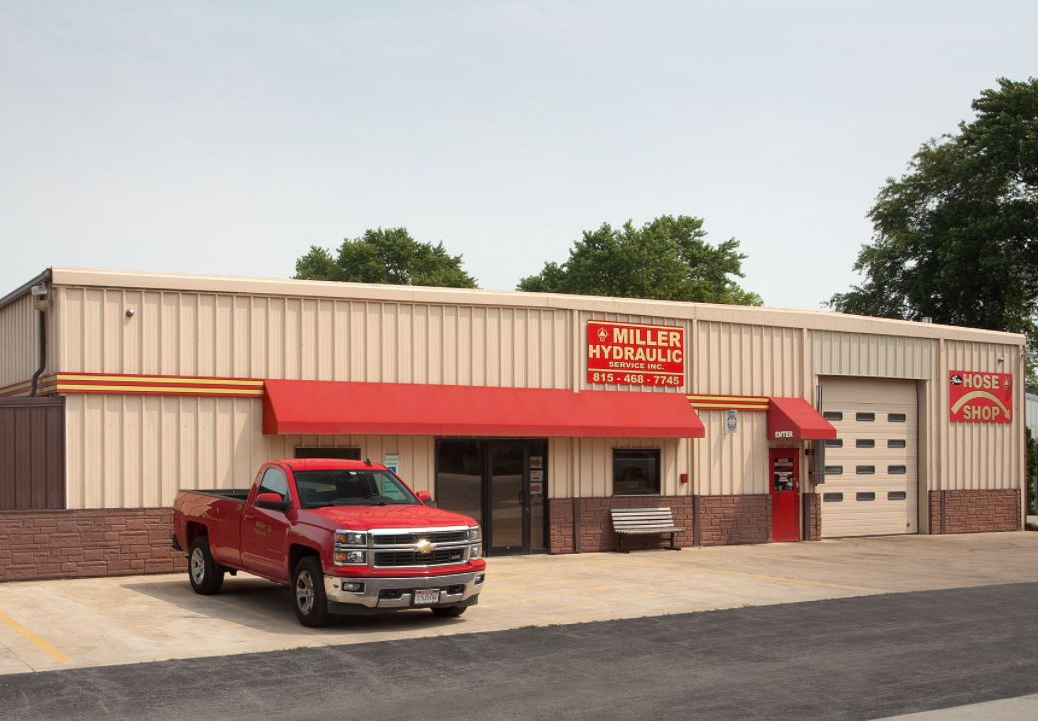
Miller Hydraulic provides in-shop and on-site forklift hydraulic cylinder repair throughout Chicagoland, Central Illinois, and Northwest Indiana. Whether your operation is in Chicago, Hammond, Joliet, or Bolingbrook, our fully stocked service trucks and Manteno repair facility give you access to diagnostics, cylinder repairs, complete rebuilds, custom fabrication, and emergency hydraulic support.
We have repaired hydraulic equipment since 1991, and completed work is backed by our six-month parts-and-labor guarantee. Contact Miller Hydraulic for a free estimate or call our 24/7 emergency line when a leaking or failing forklift cylinder threatens to stop material movement.


