
Single-Acting Cylinder Repair in Manteno, IL
SERVING NORTHERN ILLINOIS & INDIANA SINCE 1991
Reliable Single-Acting Cylinder Repair
A single-acting cylinder extends under hydraulic pressure but relies on gravity, a spring, or the load itself to retract, which makes it a common choice for basic lifting and clamping applications like dump beds, hoists, and simple lift equipment. When one starts leaking, losing pressure, or extending unevenly, the problem usually comes down to worn seals, a bent or scored rod, or internal leakage past the piston, and any one of those issues can shut down a piece of equipment until it's fixed. Miller Hydraulic has repaired single-acting cylinders across nearly every industry since 1991, and we know how much a piece of downed equipment costs an operation in lost time.
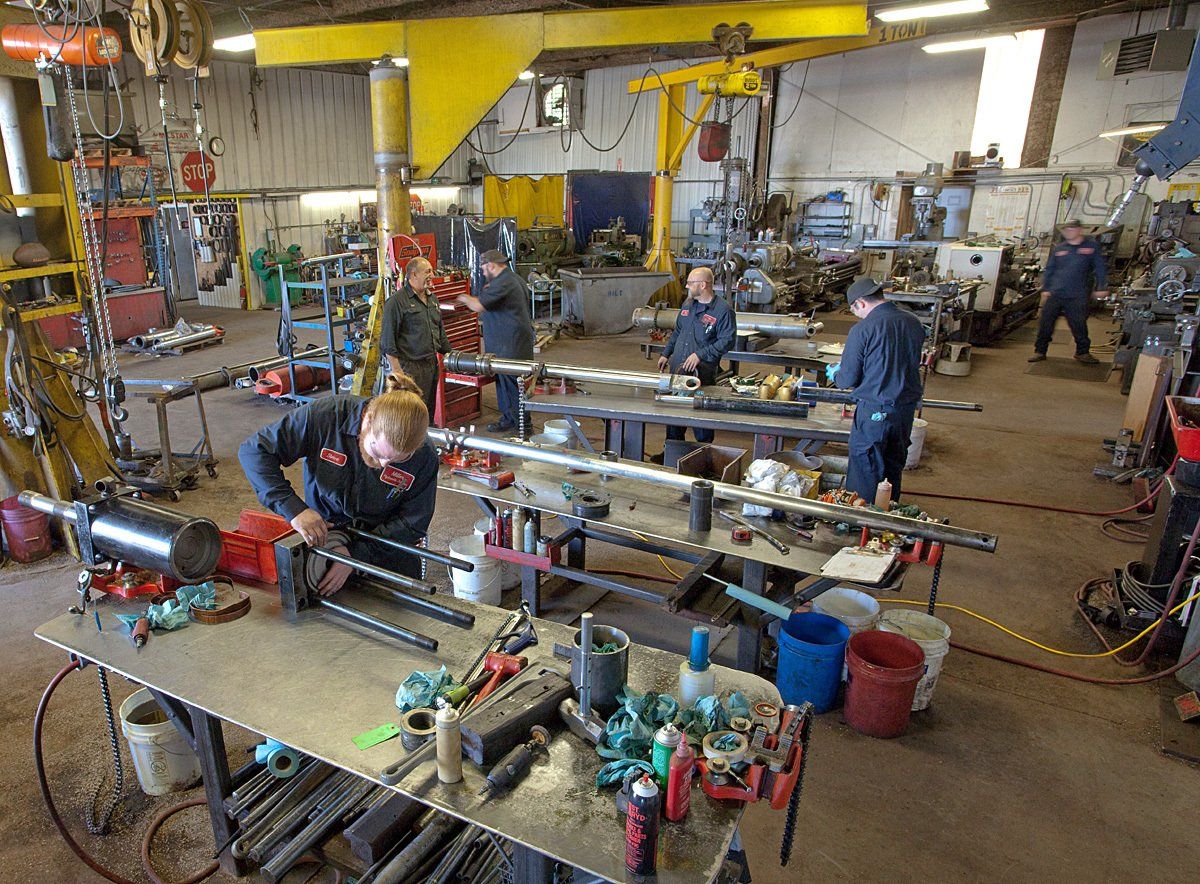
Repaired With Accuracy & Care
A single-acting cylinder has a simpler internal design than a double-acting cylinder, since it only needs one pressure port to extend and relies on gravity, a spring, or the load itself to bring it back. That simpler construction usually means fewer components for our technicians to inspect and replace, which is why Miller Hydraulic approaches single-acting cylinder repairs with accuracy and care rather than treating every cylinder the same way. We inspect the seals, rod, and internal bore for wear or damage, and recommend a repair, rebuild, or replacement based on what we actually find, not a one-size-fits-all fix.
Get a Free Estimate Today
If a single-acting cylinder is holding up your operation, contact Miller Hydraulic today for a free estimate. We've served Northern Illinois and Northwest Indiana since 1991, with a 24/7 emergency line available when downtime can't wait.
Single-Acting Cylinder FAQs
Why Is My Single-Acting Cylinder Retracting Slowly?
Since a single-acting cylinder relies on gravity, a spring, or the load itself to retract rather than hydraulic pressure, slow retraction usually points to a weak spring, internal drag from worn seals, or an issue with the load path itself rather than the hydraulic system. A technician can inspect the cylinder to determine which one is the actual cause.
Is a Single-Acting Cylinder Cheaper to Repair Than a Double-Acting One?
Often, yes. Because a single-acting cylinder has fewer seals and only one pressure port, there are typically fewer components to inspect and replace, though the final cost still depends on the specific damage found during inspection.
Can a Single-Acting Cylinder Be Rebuilt Instead of Replaced?
In most cases, yes. Rebuilding a single-acting cylinder is usually the more cost-effective option unless the bore or rod is too damaged to restore safely, and a technician can tell you which applies after inspecting it.
What's the Difference Between a Single-Acting and Double-Acting Cylinder?
A single-acting cylinder uses hydraulic pressure to extend but relies on gravity, a spring, or the load itself to retract, while a double-acting cylinder uses hydraulic pressure for both directions through a second port. That difference is also why the two have different common failure points and repair costs.


