Tie-Rod Cylinder Repair in Manteno, IL
Serving Northern Illinois & Indiana for More Than 30 Years
Complete Rebuilds for Tie-Rod Cylinders
A tie-rod cylinder holds its end caps in place with external rods that run the length of the barrel, torqued to a specific spec rather than welded, which means the whole unit can be fully disassembled for service instead of machined open like a welded body cylinder. That bolted design makes tie-rod cylinders a common choice for presses, stationary industrial equipment, and other high-pressure, multi-part systems where full serviceability matters. When one starts leaking at the rod ends, losing torque, or showing internal wear, the cause is usually a worn seal, a stretched or damaged tie rod, or uneven torque across the assembly. Miller Hydraulic has rebuilt tie-rod cylinders since 1991 and knows exactly what a system like this needs to hold pressure long-term.
Complete Rebuilds & Re-Torquing for High-Pressure Systems
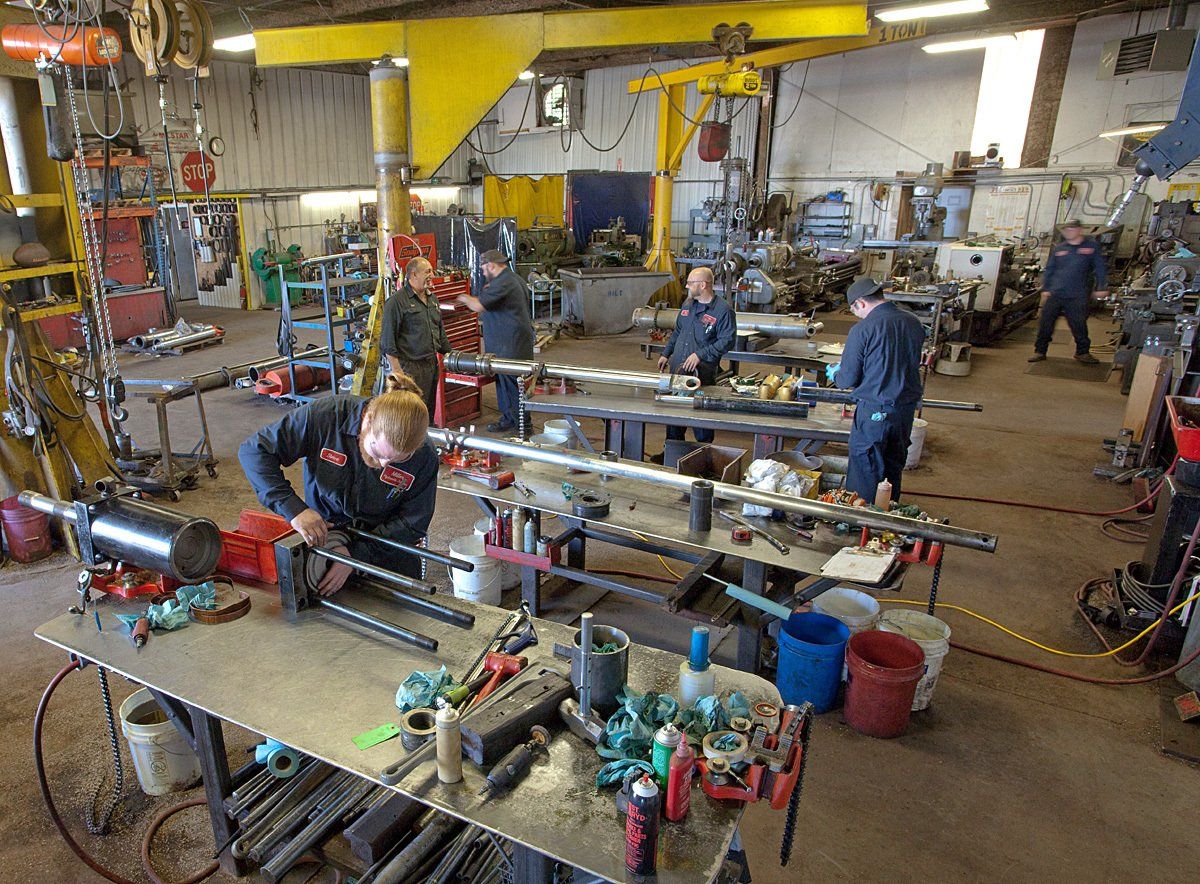
Because a tie-rod cylinder comes apart by removing the tie rods rather than cutting into the barrel, our technicians can fully disassemble it, replace worn seals and components, and inspect the barrel and rod for scoring or wear before reassembly. Every tie rod is re-torqued to the correct specification during reassembly, since uneven torque is one of the most common causes of a repeat leak or premature failure after a rebuild. That full-disassembly access is also what makes tie-rod cylinders well suited to a complete rebuild rather than a partial patch when a system has multiple points of wear.
Professional Tie-Rod Cylinder Repair & Rebuilds
If a tie-rod cylinder is leaking, losing torque, or due for a full rebuild, Miller Hydraulic can take it apart, replace what's worn, and re-torque it to spec. Contact us today for a free estimate and a 24/7 emergency line for urgent repairs.
Tie-Rod Cylinder FAQs
Why Does Re-Torquing Matter So Much on a Tie-Rod Cylinder?
Uneven torque across the tie rods puts uneven stress on the end caps and seals, which is a common cause of leaks or failure shortly after a rebuild. Torquing each rod to the correct specification is what keeps the cylinder sealing evenly under pressure.
Can a Tie-Rod Cylinder Be Fully Rebuilt, or Is It Sometimes Beyond Repair?
In most cases, yes, it can be fully rebuilt, since the bolted design allows complete disassembly and inspection. Replacement is usually only necessary if the barrel or rod itself is damaged beyond safe repair.
How Is Repairing a Tie-Rod Cylinder Different From a Welded Body Cylinder?
A tie-rod cylinder can be fully disassembled by removing the tie rods, while a welded body cylinder requires machining into the barrel to reach the internals. That makes tie-rod repairs generally more straightforward, though both are serviceable.
Are Tie-Rod Cylinders Only Used in High-Pressure Applications?
They're especially common in high-pressure, multi-part systems like presses and stationary industrial equipment, but the bolted design is used across a range of pressure ratings wherever full serviceability is a priority.


