What Is a Hydraulic Cylinder?
Hydraulic cylinders are fundamental components in modern machinery, translating fluid power into linear mechanical force and motion. Common across industries—from construction and agriculture to manufacturing and aerospace—these devices enable lifting, pushing, pulling, and precise positioning under heavy loads. Understanding what a hydraulic cylinder is, how it works, and where it’s used helps decision-makers specify the right unit for performance, reliability, and safety.
What Is the Basic Design of a Hydraulic Cylinder?
A hydraulic cylinder consists of a cylindrical barrel, a piston fitted with seals, a piston rod, and end caps (head and cap). Pressurized hydraulic fluid enters the barrel, exerting force on the piston to produce linear motion. The rod transfers that motion to the external mechanism. Seals prevent fluid leakage and maintain pressure, while materials and tolerances determine durability and suitability for specific operating conditions.
How Does Hydraulic Cylinder Operation Translate to Force and Motion?
Hydraulic cylinders follow Pascal’s principle: pressure applied to a confined fluid is transmitted equally in all directions. Force output equals fluid pressure multiplied by piston area. Engineers select bore size, stroke length, and operating pressure based on required force, speed, and space constraints. Single-rod, double-rod, and telescopic cylinder designs adapt the basic principle to achieve bi-directional force, compact stowed length, or extended reach.
What Are Common Hydraulic Cylinder Types and Applications?
- Tie-rod Cylinders: Economical and easy to service; common in industrial presses and material handling.
- Welded-Barrel Cylinders: Compact and robust; used in mobile equipment like excavators and loaders.
- Telescopic Cylinders: Multi-stage extension for long strokes in confined spaces (e.g., dump trucks).
- Double-Acting Cylinders: Apply force in both directions using controlled fluid on both sides of the piston.
- Mill-Type Cylinders: Heavy-duty, large-bore units for steel mills and marine applications.
- Steering and Rotary Actuators: Specialized cylinders and units for vehicle steering and rotary motion.
What Performance Factors and Specifications Matter for Selection?
- Bore Size and Rod Diameter: Determine force capacity and buckling resistance.
- Stroke Length: Defines maximum travel distance.
- Operating Pressure and Flow: Influence speed and power; system pumps and valves must match cylinder specifications.
- Mounting Style: Clevis, flange, trunnion, and foot mounts affect alignment, load distribution, and installation complexity.
- Seal Material and Type: Critical for fluid compatibility, temperature range, and resistance to contamination.
- Cycle Life and Maintenance Intervals: Drive decisions on material, coating, and protection against environmental and debris exposure.
How Do Reliability, Safety, and Maintenance Impact Hydraulic Cylinder Use?
Routine inspections, proper filtration, and correct fluid selection prolong service life and prevent catastrophic failures. Contamination and seal wear are primary causes of leakage and reduced performance; monitoring fluid cleanliness and addressing system overheating are essential. In critical applications, redundant systems, pressure relief devices, and load-holding valves enhance safety. Improper repair or ad-hoc fixes can accelerate wear and increase long-term costs.
Which Industry Trends and Innovations Are Shaping Hydraulic Cylinder Design?
- Lightweight Materials: Advanced alloys and composites reduce weight while preserving strength for mobile machinery.
- Smart Sensors and Condition Monitoring: Embedded sensors monitor pressure, temperature, and position to enable predictive maintenance.
- Improved Sealing Technologies: New polymers and geometries extend seal life under extreme conditions.
- Energy Efficiency: Systems that recover or reduce wasted hydraulic energy lower operating costs and emissions.
What Should Decision Makers Know About Hydraulic Cylinders?
- Hydraulic cylinders convert fluid pressure into linear force and motion with high power density.
- Selection depends on bore, stroke, pressure, mounting, and seal compatibility.
- Common types include tie-rod, welded-barrel, telescopic, and mill-type cylinders for a range of applications.
- Reliability hinges on cleanliness, correct fluid, appropriate sealing, and proper system design.
- Innovations focus on materials, sensing, sealing, and energy efficiency to meet modern demands.
Choosing the right hydraulic cylinder requires aligning application demands with mechanical specifications and maintenance practices to ensure safe, efficient, and long-lasting performance.
What Are Some Common Issues With Hydraulic Cylinders?
- External leaks: Seals or fittings worn or damaged; visible fluid, reduced system pressure.
- Internal leakage (blow-by): Worn piston seals or scoring; cylinder drifts or won’t hold position.
- Seal failure: Age, contamination, heat, or improper installation; causes leaks and loss of force.
- Contaminated fluid: Dirt, metal particles, or water; accelerates wear, causes scoring, and damages seals.
- Rod damage (nicks, scratches, scoring): Debris or mishandling; leads to seal failure and leaks.
- Corrosion: Moisture in fluid or environmental exposure; pitting on rod or cylinder tube, accelerated seal wear.
- Misalignment: Poor mounting or shaft offset; uneven wear, bent rods, accelerated seal/guide failure.
- Bent or twisted rod: Shock loads or misalignment; binding, uneven extension, permanent damage.
- Overheating: Excessive cycle rate, low fluid level, or fluid contamination; softens seals, reduces fluid viscosity.
- Cavitation: Rapid pressure drops creating vapor bubbles; noisy operation, pitted surfaces, poor performance.
- Pressure spikes/shock: Sudden loads or valve faults; shortens component life, can cause seal extrusion or burst hoses.
- Slow or uneven movement: Air in the system, clogged ports/filters, internal leakage, or worn pump/components.
- Worn guide bushings or bearings: Side loads or contamination; rod chatter, scoring, and inaccurate travel.
- Hose or fitting failure: Age, abrasion, or improper routing; sudden leaks and loss of function.
- Incorrect fluid (viscosity/additives): Wrong lubricant properties damage seals and reduce efficiency.
- Improper installation or mounting hardware: Wrong pins, torque, or geometry; premature failures and unsafe operation.
Regular fluid maintenance, proper filtration, correct alignment and installation, and routine inspections prevent most of these problems.
Are Your Hydraulic Cylinders in Need of an Inspection in Chicago, Northern Illinois, & Indiana?
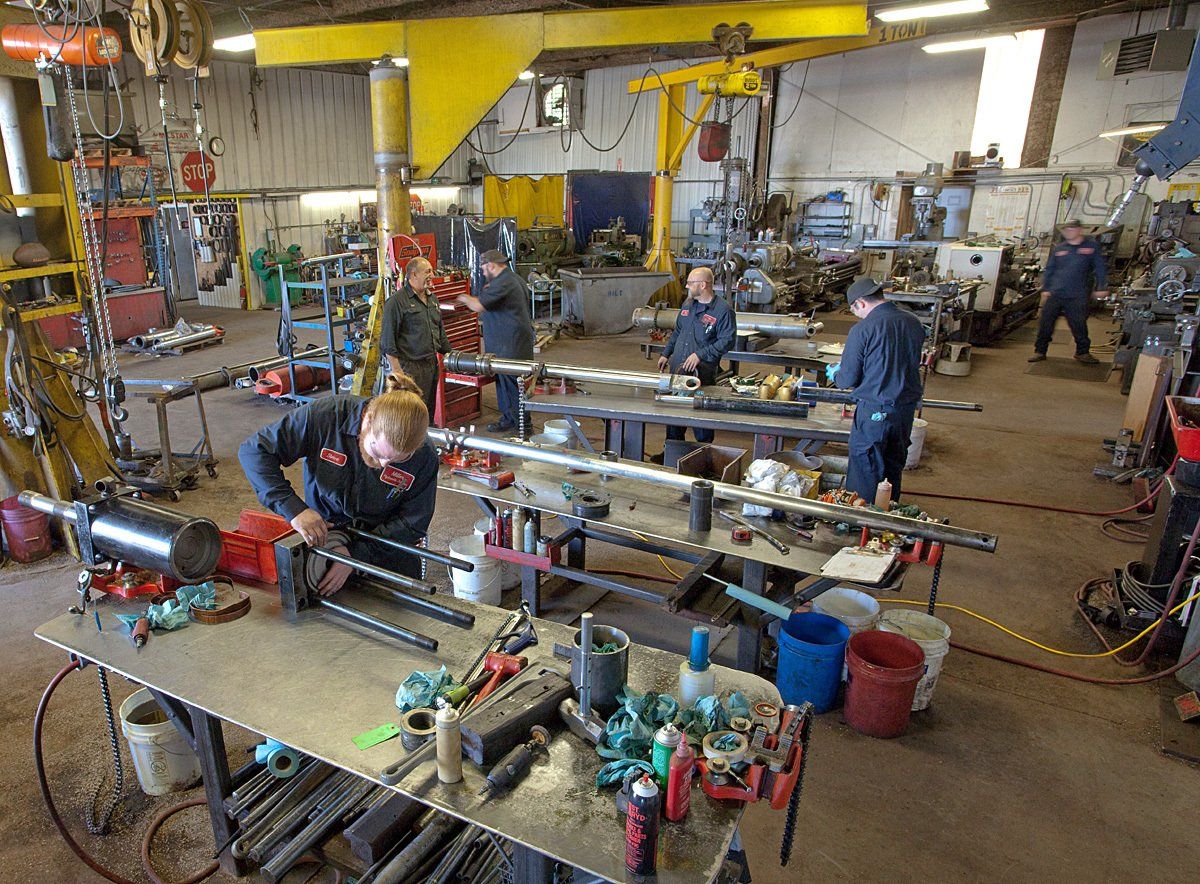
If your hydraulic cylinders are overheating or experiencing rapid pressure drops in Chicago, Joliet, Chicago Heights, or Naperville, IL, contact Miller Hydraulic. We’ve been servicing hydraulic systems in Chicago, Northern Illinois, and Indiana since 1991 and are considered area experts in the field. Miller Hydraulic is locally owned and operated and can repair hydraulic systems for most industries.


